As someone who is generally very Online, the information that makes its way onto my Twitter feed (which is my preferred social media source) is almost all of the depressing sort. If it isn’t the horrors and war crimes being committed by Israel against Palestinians, then it’s something involving how screwed up life happens to be in America. And it takes its toll on me, eventually, but I always come back because I like to know things, and Twitter happens to be the quickest most direct path for the news to arrive.
But something I saw the other day bugged me more than it should have. I saw, per Billboard, that 60 percent of attendees during the first weekend of the Coachella music and arts festival financed their tickets through a Buy Now Pay Later Program. As an aside I have neither been to nor had any interest in going to Coachella; the idea of large crowds has never appealed to me. Regardless of my own personal inclinations as far as spending money goes, 60 percent is an incredible number. It has to be the so-called canary-in-the-coal-mine speaking to a much larger problem that Americans — notably young Americans — are experiencing.
For many years I have been beating on a drum very similar to the one I just mentioned, which is that almost 60 percent of Americans do not have $1,000 in the bank in case of an emergency. This figure has been more or less consistent ever since Bernie Sanders ran his first campaign to be President nearly a decade ago, meaning very little has changed since then. The federal minimum wage has not gone up from its paltry $7.25 number since 2009. In other words it has nearly been a full generation since workers have gotten a raise.
We can obviously go and on on with this, and I know because it was once a major preoccupation of mine to do just that. To go on, and on, and on, about the plight of the American worker. The long and short of it is actually quite simple: You can pretty much draw a straight line from when in the early-1980’s President Ronald Reagan cut the corporate tax rate and gave even more power (via money, which is where power comes from) to the already-wealthiest people in the country.
Where American labor screwed up, around that same time, was that rather than binding together and showing their strength through increased union participation, they actually accepted the corporate tax cuts through the guise that they — the workers — would also be able to make more, and save more, because all of those ‘good’ billionaires would allow for the extra money they were making to ‘trickle down’ to the hands of their workforce. This clearly never happened, and thus the stratification of wealth over the last 40 years has been clearer than ever before.
Most recently Donald Trump’s tariffs tanked the stock market for about a week, and then, poof, he put a 90-day pause on the tariffs (to some countries) and the stock market shot back up. But where did that money go, exactly? The money that was in everyday folks’s 401K’s? The money that was lost when the market dipped? It only ever goes one way: Out of our pockets and into theirs. Theirs being the wealthiest in American society.
Late comedian George Carlin once said, speaking of the rich, that ‘It’s a big club and you ain’t in it.’ And that’s fine, you know? I do not hate rich people for who they are, I hate them for what they do. I hate that aside from being a professional athlete (and a really good one, at that), or a famous actor or actress (and a really prominent one), objectively speaking it is extremely difficult to reach the ungodly amount of dollars I am speaking of here — hundreds of millions, billions, tens of billions — without exploiting people. That is what I have a problem with.
It is my personal opinion at this point in my life, as somebody who works hard and earns a pretty good living, that we are very soon to reach a tipping point insofar as the American economy is concerned. Something about these sixty-percent figures. Whether it is young people who don’t have $600 to spend out-of-pocket to go to Coachella, or whether it’s 60 percent of the general public who do not have $1,000 in the bank in case of an emergency. Is this supposed to be normal? Are most people just, like, broke?
I remember in the days when I would argue about politics with people on places like Facebook, with my so-called friends, and most of them were conservative, and I would respond line-by-line and brick-by-brick with statistics very similar to the ones I have posted on here, and yet individuals would jump in the thread to tell me how I was on the wrong side. For saying this isn’t normal. 60 percent of people don’t have $1,000 in the bank? That’s their fault, they would say. Every other country has free healthcare? But they have to wait in lines, they would say. It was all a very illuminating experience for me, caring about everyday workers, and having those same everyday workers cheer on the billionaires and tell me that This Is As Good As It Gets. And moreover, that I should be happy about it. Living here, that is.
My name is Eric Reining and I live in Southern California and in a bad year I might make $115,000. In a good year I might make $130,000. That is supposed to be good money. That is more money than either of my parents ever made — combined — when they were married in the prime of their lives while they were raising three sons. It blows them out of the water, as a matter of fact.
And while I am proud to see six-figure numbers attributed to my name, because that shit is cool, I very much prescribe to the idea of what Ray Liotta told his son (who would eventually turn into Johnny Depp) in the movie Blow when he said ‘Money isn’t real, George. It doesn’t matter. It only seems like it does.’
I mention how ‘well’ things are going — earning an acceptable living — as a way to illustrate how much happier I was when I was making $12 an hour at an office job an entire lifetime ago. That was 2010, by the way. I did not know how happy I was, of course, way back then, but I do know how much cheaper it cost me to live. I split my one-bedroom rent down the middle with my best friend and my half costed $440 a month. Gas was cheaper. Groceries were cheaper. We had almost no money, my best friend and I, and yet we were able to go to the casino almost every night and lose a couple hundred dollars apiece. Sometimes we would win. Mostly we didn’t, though.
And it didn’t matter, the winnings or the losings, because I knew that the very next month my rent was going to be that same certain amount, that gas and groceries and everything else would be cheap, that I could just sort of exist. Making my twelve bucks an hour. Getting high all day and every day on the cheap yet effective weed that I smoked on. Life felt like an easy endeavor. It seemed freeing not having to deal with any economic anxiety.
I don’t know when this changed, when everything got so goddamn expensive. I suppose it was a post-Covid deal, but it could easily have been well before that in a more-money-more-problems sort of way. I guess the main point is that every year for the last three years I have made more money than ever before and yet still I feel as if I am living paycheck-to-paycheck.
It is thus how I have a thesis: That unless you are making like $250,000 a year then you are basically broke. The glory days of the 1980’s and 1990’s and perhaps even the early aughts of having a single household income while still providing for a family are pretty much dead. Working a low-skilled job and being able to survive on it are dead. There are countless individuals who require not only a day job but have to drive for places like Uber or Lyft, or perhaps even a third job, such as Doordash or Postmates. Just to get by every month.
In other words, America has become a runaway train and there are only two places for that train to go: The people who don’t need the money get more of it, and the people who do, need it, that is, seem to go further into poverty.
This is why I say we are nearing to a tipping point, if of course we aren’t already there. Leisurely activities such as attending a music festival should not be putting people further into debt. Politicians should not willy-nilly be able to assign tariffs and then remove them for no reason other than to transfer wealth from working people to billionaires. Young people should not have to wait around for a family member of theirs to die before they are able to have a house of their own. Some dreams should not be dreams. They should be obtainable.
For almost a decade I have assumed I could snap my fingers and buy my first house, and it’s ironic that the more money I make the further away I feel that I am to accomplishing such a goal. Sure, for a time I was either ignorant or in substantial credit card/student loan debt, or both, but then Covid struck and I was able to eliminate each and all of my debts and I had more money to my name than ever before. Furthermore, I was no longer a stupid kid. I was 30 years old and had enough financial experience at my back to understand what was possible and what was not. Buying a house was in my grasp.
But it didn’t happen because massive corporations more or less conspired — with the willing aid of both Democratic and Republican politicians — to use inflation as an excuse to raise the prices on literally everything. The fossil fuel industry (who try to brand themselves as ‘energy’ companies even though they really just sell oil and gas) jacked up their prices and quarter-by-quarter recorded record profits. Your same $100 grocery receipt overnight turned into $120, and then $130, and then $140, and so on. Your rent went up, because it most certainly went up.
And we must all have some weird collective amnesia, or we all just accepted that this is life, because once inflation got under control none of those prices went down. They remained the same. The giant corporations didn’t decide one day out of the goodness of their hearts to lower their prices commensurate the level of such an inflation — which was likely blown out of proportion in the first place. They simply continued raking in their record profits because they understood that regular people, like, need things to survive.
There is surely enough blame to go around as to why this is the current reality that we live in. Most obviously the billionaires, but the billionaires would not exist if not for the politicians who do their bidding. The wealthy and the decision-makers (Democrats and Republicans) go together like peas and carrots, because you cannot have one without the other. Both sides pretend publicly to hate each other, the so-called Right and the so-called Left, that is, but in reality they are all in the club. They eat dinner together. They get drinks together. They are friends. Because they all take money from the billionaires.
To the layman all of this sounds very conspiratorial. As if I am one of those who believes the Earth is flat, or that time travel is real, or that aliens who are living underground built the ancient pyramids in Egypt, and so on. The layman wants to believe that there is a real difference between being a conservative or a liberal. People really want to like identify as something, and they want to believe that the politicians they worship care about them.
I haven’t voted since the 2019 Democratic Primary in the state of California and I do not plan to any time soon, since I (like millions of other Americans) do not see a meaningful contrast between America’s two political parties. So-called liberals, or Democrats, believe people like me are the problem because I agree with them directionally but do not support their lessor-of-two-evils candidate every four years. But so it is.
To me, someone who cares about politics but doesn’t really waste his time getting bent out of shape over them, there is only one issue, and it’s an issue that nobody on the mainstream news — Fox, NBC, CNN, etc. — ever talks about. My single issue is this: Until money is removed from politics, i.e. until the billionaires and multi-millionaires are no longer able to fund both sides of an election, making them (the rich) the de facto winners either way, then nothing is ever going to change. The rich will get richer. The poor will get poorer.
This idea was burned in my brain when Bernie Sanders began to gain momentum during the 2020 Democratic Primary and the stock market started to drastically dip — namely the health insurance industry — because they felt fear for the first time in a long time that a politician existed who was going to offer real change. It wasn’t the anti-establishment Donald Trump, who despite claiming he was going to ‘drain the swamp’ and fight for the every-man was (and is) actually incredibly good for big business. And it obviously wasn’t the quintessentially establishment Joe Biden, who, upon taking control and inevitably winning the Democratic Primary, restored confidence in the futures market.
Regardless which side of the fence you happen to sit on, it is this that most tangibly magnifies the idea — which I consider at this point to be an objective fact — that the super wealthy do not care which party is in office, because both parties cater to the rich. Even the slightest threat, which Bernie Sanders, in fact, was, scared the billionaires. Which was reflected in the stock market going down. When he fell behind Joe Biden, the market shot back up. This was not a coincidence.
I once read online somebody opine, whether it was 2016 or 2020, that in which I didn’t actually want to believe but it turned into the perhaps the most prescient phrase I’ve ever heard. They said: ‘Democrats would rather lose to Donald Trump than win with Bernie Sanders.’
At every turn the Democratic Party’s main objective is to crush the will of the workingclass. Their second objective is to actually win a general election. This has been proven by the shady tactics they implemented to defeat Bernie both in 2016 and 2020, and was proven further by their refusal to run an open primary and instead trot out a moribund campaign headed by a candidate in Kamala Harris who probably would have lost to like ten other significantly more qualified Democratic candidates. As a consequence her chances, Kamala’s, were basically dead on arrival against Donald Trump.
Alas, the moral of this story is that I have no earthly idea how the average American worker survives on a median income of roughly $42,000 per year. I don’t know, and I don’t want to know, how the average Californian survives on a median income of about $67,000 per year. I can only speak on my own behalf, because I do pretty well compared against those figures and yet at the end of every month I remain constantly befuddled as to where exactly all of my money went. This and that. Here and there. Obviously. I do like to have a good time.
But that brings me back to the original: These numbers lead to those 60 per-centers who have to finance Coachella tickets. They lead to not having a thousand dollars in the bank in case of an emergency. They lead to so many problems, and so many fights, I’m sure, and are soon to force otherwise completely upstanding individuals into doing things that might make some of us blush. And I won’t even blame ’em for it. I will understand.
* * * * *
Aside from the law-related minutia I’ve been reading, I picked up from my bookshelf recently a bestseller titled The Perks of Being a Wallflower — which Niña once bought me some years ago (along with The Art of War). It’s been in the back of my mind for a while, reading this particular book, but since Niña’s death I have been simultaneously avoiding certain items such as these, as a means to have so-called unfinished business that I can keep around as long as I choose, while on the other hand wanting to close these loops. To actually finish the unfinished business.
Perhaps it’s ironic or perhaps it’s entirely unironic, but like a page into The Perks of Being a Wallflower it is made painfully clear that the backdrop of the story is about a high schooler who committed suicide. That’s neither an inducement nor a reason to avoid continuing on with the damn thing. It’s just what it is. I know it is going to be a heavy piece of literature and after the first handful of pages I have not picked it up again. But I will… eventually.
Suicide itself has never, like, bothered me — as a subject. I sort of described my general feelings on it during my 2024 Year in Review; it just so happened that it so suddenly and without any warning not only got close to me but touched me, personally, because Niña was one of my best friends. I wrote about it as thus:
We on Future Bets obviously understand the magnitude of leaving loved ones and family members, and so on, holding the bag, so to speak, and having to deal with all the questions and the guilt. In other words: We get it.
And yet also we understand that, actually, it takes an incredible amount of courage to follow through with such an act. We are obviously biased with the amount of love we happen to possess for one Niña Baby, but to me it seems entirely lazy and shortsighted to wash our hands and declare that Niña was merely a selfish girl committing a cowardly act. Maybe there are situations where such a declaration might be true. But not here. Not with Niña.
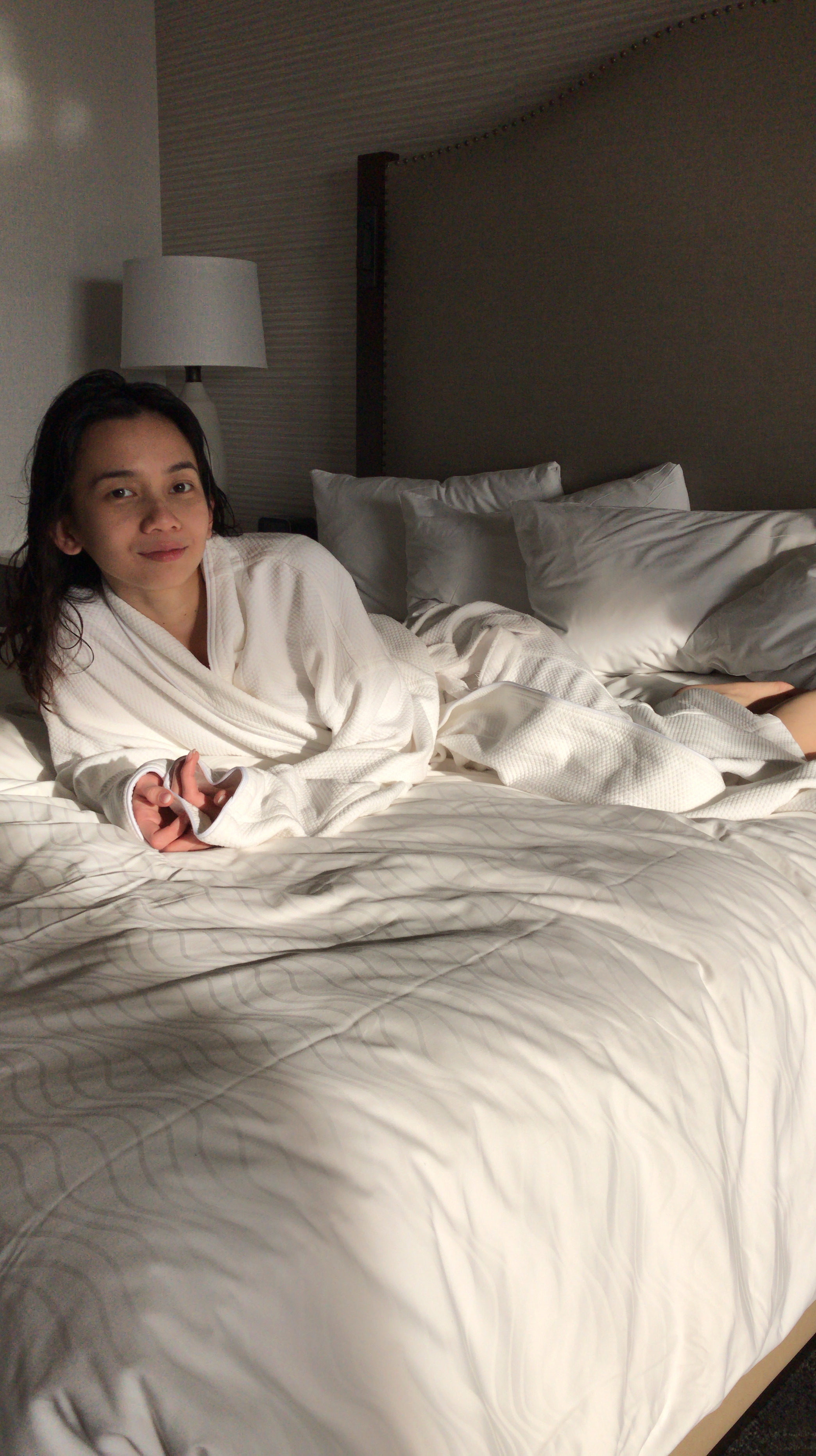
This was my perspective before Niña’s passing, regarding suicide, when it involved people I knew from afar or celebrities I didn’t know at all. It frankly would not have made any sense whatsoever if my feelings changed because this specific death did affect me personally, and did make me feel guilty, and did leave me holding the bag (to a certain extent). If anything it only reinforced my point of view on the matter.
And I imagine a sizable amount of the respect or dare I say reverence I have for Niña following through with the act in which she was not only a credible threat to complete but determined entirely, is that I know I never have and never will have the guts to do something similar. As a matter of fact I have (at least a few times) in the past almost committed suicide unintentionally via drug usage, whether from cardiac arrest due to my prior indulgences using painkiller medication, or from mixing said medication with alcohol while I got behind a wheel when I had no business doing so.
Anyway, suicide. Books. Etc. The moral to this story is one of self-control, and discipline, and understanding that I lack in both. The word lack literally translates to ‘the state of being without or not having enough of something,’ and as I sit here I find that an incredibly generous interpretation. I may have zero. Self-control. Discipline.
I say this because over these last two years and change I have made many references to women, and alcohol, and gambling. I have tried to explain my decision-making process. I have attempted to justify my actions, many of which are justifiable and some of which have not been. My perspective has been sound if for no other reason than it being my take on reality. By definition it has to make sense, you know?
For quite a time I pawned it off — my process — to being heartbroken and acting out as a means to distract myself. Since Niña’s death I have sort of found a new avenue with which to blame my choices on. In other words, being alive involves pain. There is personal pain, and there is pain that is, through no fault of your own, delivered upon you. One makes choices which can go any which way, hither and thither, and then again others are capable of making their own, choices, that is, and those, too, can go any which way.
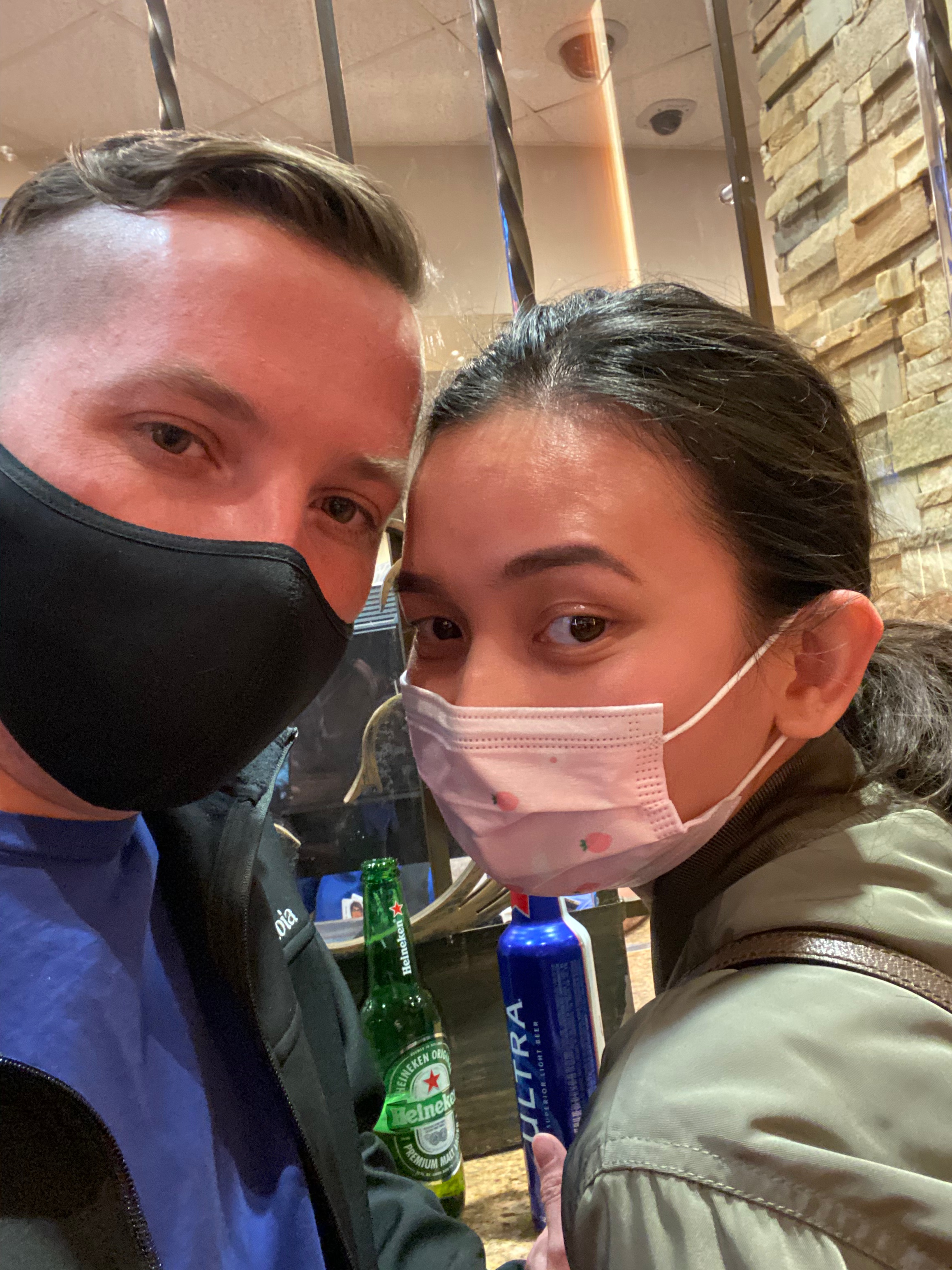
Where I have been so blind over all of these months and years, while I have been busy blaming myself for why I feel the way I do, or while I have been busy blaming others for circumstances that have been out of my control, is that perhaps the problem is me. Perhaps acting out, as I described it in the last paragraph, is simply what I would be doing anyway. Whether or not the stimulus was orchestrated by me, personally, or whether it was done to me. It is entirely possible that I would be making the same choices, and doing the same things, regardless of the pain I felt.
The truth is I have never felt more powerful in my whole life. I have never had a firmer grasp on the way in which I communicate with others; whether it be some random patron at my job whom I not only anticipate but expect to make money off of; whether it be some woman I come in contact with, one where we do the song and dance on Facebook or Instagram before I procure their phone number, where they almost like know, or understand, immediately, that I am exactly who they think I am, a dog, or a womanizer, or a player, or whatever you choose to call it, and there is still nothing they can do about it because every other man who pursues them is either weak or on the chase or a square or all of the above.
But that kind of gets me back to my point about being blinded by it all. For most of my life — at least now, looking at it in retrospect — I think I’d been one of those irrational-confidence or unjustifiable-arrogance guys. I don’t even know if those are, like, a thing, but if they are then I would have been one of them. The accomplishments I obtained really meant something to me, but they didn’t mean anything objectively. What was so cool about dating good-looking girls if they weren’t any longer in my life? What was so great about getting accepted into and spending a year at Virginia Tech if I never graduated from there? What is so special about having a good job if I don’t do the responsible thing and save more money to advance myself in life? And so on.
I can forgive so many things about myself, and the way I was, and the way I am, in general, but one thing I cannot forgive is the so-called roadblock in which I find myself directly in front of currently. It is neither irrational confidence, nor is it some unjustifiable arrogance. It is a legitimate point — whether it be a starting point or some version of an end point — where I am genuinely confident with myself. Where I can look at myself in the mirror and find a fairly (if not actually) attractive man. Where I can stomach that the choices I make on a day-to-day basis, at least as they pertain to the interpersonal relationships I share in with those whom I care about, are absolutely unimpeachable. Where I have never been on better terms with members of my immediate family. Where I possess self-awareness and empathy for others as if they were both part of the same paradigm. I have never been smarter or more capable than I am in this exact moment.
And yet this roadblock that I speak of is still right there. In front of me. I would argue that it has probably existed there for the better part of the last two years. It has become more than anything else a symbol which acts as a reminder that I can be all of those things that I just mentioned, about being confident, and smart, and empathetic — the best possible version of me that has ever existed — and still I am so far away from where I need to be. No matter how high up I get, spiritually and emotionally and as a very decent man, still this roadblock is there. Each time I decide to have a good time. To run around with a new girl. Or to drink. Or to gamble. Or to do all three at once.
This frustration I find is not with the roadblock. It is with myself, of course. We on Future Bets wanted so desperately to blame this frustration on a love that we believed was more than love, until that love went away; we grieved and then we bargained and then we wanted more than anything in the entire world to blame Niña for leaving us; we had this terribly long and arduous road that began at birth but didn’t really like start officially until we were 19 years old that involved these very personal setbacks that became, or turned into, the reasons why we do the things that we do. And they are never going to stop, you know? The pain and heartache only gets worse from here on. It never does get any easier.

To understand this is to understand that there is no roadblock. The roadblock does not exist. It is neither short nor tall; it is neither skinny nor wide; it is only within one’s own imagination. This roadblock. Nobody is forcing me to be this way. Nobody is making me make these decisions. These decisions with which I lament so ardently are mine and mine alone.
As always I still do very much miss Niña. After more than a month of not texting her mother, I wrote her the other night simply to say ‘I still think about Niña every day,’ to which she responded: I missed [sic] Nina every day. But we have to move on and keep good memories with her.
If we are taking accounts then it is true, I have for all intents and purposes stopped blaming myself (which was difficult for me) in the same way that I have stopped giving myself such a hard time about not reaching out as a means to save Niña’s life. I think I described it best during my last blog when I referenced The Time Machine, about how her specific end was somehow meant to be. That there is no going back. That her destiny was to love me and be loved by me, and that when she was no longer here I would stick around to miss her, and write about her, and keep her alive in the best ways that I know how to. (Please forgive the ending of sentences with prepositions.)
But before I go into another deep-dive about her that would probably span another thousand words, I will leave this, Chapter Three of my 2025 campaign, exactly where it is. I hope by the next time I am here I have positive news about my habits and life choices. Because I know I have it in me, somewhere. Whether I have to leap over this roadblock, or push through it, or realize finally that it isn’t there. And just walk on by.
Love,
ER
 Future Bets
Leave a comment